
When to pull over right away

Pull over and turn off the engine if:
the smell comes with smoke, a rising temperature gauge, a warning light, or a sharp electrical odor. Get everyone out if smoke is coming from under the hood, and do not open the hood if you see flames. Call for help.
Most burning smells are not emergencies, but these combinations can be.
Identify the burning smell
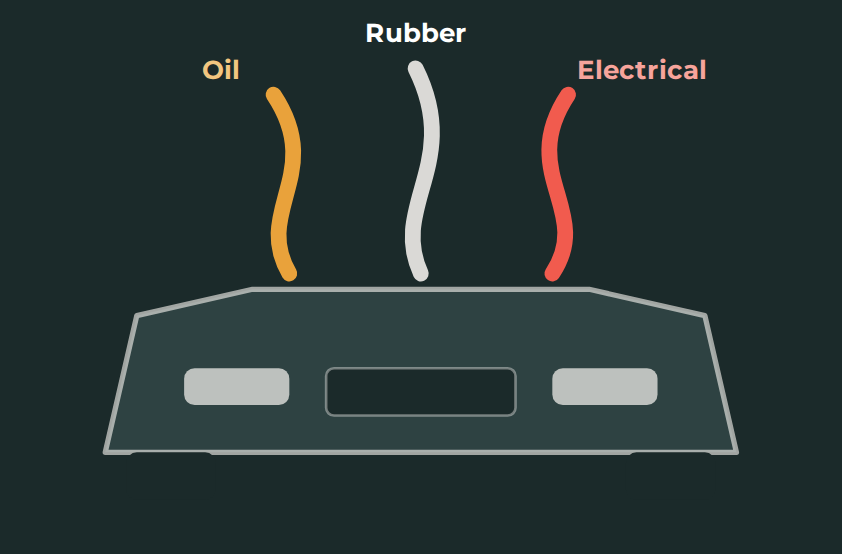
Match what you smell to its most likely cause and how fast to act.
Burning oil
Oil leaking onto the exhaust or hot engine parts
Inspect soon
Burning rubber
Slipping or rubbing belt, hose on a hot part, tire rubbing
Inspect soon
Plastic or electrical
Overheating wiring, short circuit, failing blower motor
Check right away
Hot, acrid metal
Overheated brakes, dragging caliper, or clutch
Inspect if it repeats
Sweet and steamy
Coolant leaking onto hot engine parts
Watch the gauge; inspect soon
Dusty, short-lived
Dust burning off the heater at first use
Normal if it fades
Burning rubber smell
A burning rubber smell usually points to a part that is slipping, overheating, or rubbing where it shouldn't. A loose or worn serpentine belt can heat up from friction, and a weak belt tensioner or misaligned pulley causes the same problem. A hose resting on a hot engine part can smell similar.
Tires can also rub the fender liner or body after suspension damage or with oversized tires. If the smell shows up when turning or accelerating and fades when coasting, check belts, tires, and wheel wells.
Burning oil smell
A burning oil smell means oil is leaking onto hot surfaces such as the exhaust manifold. You might see light smoke from under the hood after a longer drive. Common sources include the valve cover gasket, oil filter, oil pan, and engine seals.
Even a small leak can make a strong smell, and it means the engine is losing oil. If you notice oil spots where you park or a dropping oil level, schedule an inspection before the leak grows.
Smelling something burning? Let's find the source.
Book an inspectionBurning plastic or electrical smell
A sharp, acrid smell like melting plastic can mean electrical trouble, such as overheating wiring, a short circuit, or a fuse melting its surrounding insulation. Left alone, it can cause failed electronics or, rarely, an electrical fire.
Notice whether it happens when you use something specific, like the heater fan, A/C, or power windows. If the smell comes from the vents, turn the system off and get it checked. Our electronic diagnostics can trace the circuit. For musty or sweet vent smells, see common causes of bad car AC odor.
Brake or clutch overheating smell
Overheated brakes and clutches give off a hot, acrid smell. Brakes overheat on long downhill grades, which is common on canyon and mountain roads around Northern Colorado. Shift to a lower gear on long descents to let the engine help slow the car.
If the smell shows up after normal driving, a brake may be dragging because of a stuck caliper or slide pin. That wears pads and rotors fast and can make the car pull to one side. On a manual transmission, a burning clutch smell usually follows hill starts, heavy traffic, or riding the pedal.
Something stuck on the exhaust
Debris like a plastic bag or road tar can stick to the hot exhaust and melt. If the smell started suddenly after driving through construction or a dirty road, this may be the cause. It rarely causes lasting damage, but it can be hard to remove without lifting the car.
Harmless burning smells
Some burning smells are normal. The first time you turn on the heat each fall, dust that settled in the system burns off for a few minutes. New brake pads and some new parts can also smell for the first few drives as coatings cure. If the smell fades and doesn't return, it is usually nothing to worry about.
Burning smell diagnosis and auto repair in Fort Collins, CO
A burning smell is your car's early warning system. Community Auto inspects the engine bay, brakes, belts, and wiring to find the source and fix it before a small leak or worn part becomes a breakdown.
For trusted auto repair in Fort Collins, call or book online. Learn about our brake and ABS service.
Frequently asked questions
Why does my car smell like it's burning but nothing is wrong?
It may be dust burning off the heater, new brake pads curing, or debris on the exhaust. If the smell keeps coming back, have it inspected.
Is it safe to drive if my car smells like burning oil?
For a short distance, usually, if there's no smoke and the oil level is fine. Have the leak checked soon, since oil on a hot exhaust can get worse.
What does a burning clutch smell like?
A burning clutch smells sharp and acrid, a bit like burnt paper or hot brakes. It usually follows hill starts or slipping the clutch in traffic.
Why do I smell burning after driving down a mountain?
Your brakes likely overheated on the descent. Use a lower gear next time, and have the brakes checked if the smell happens on normal roads.