
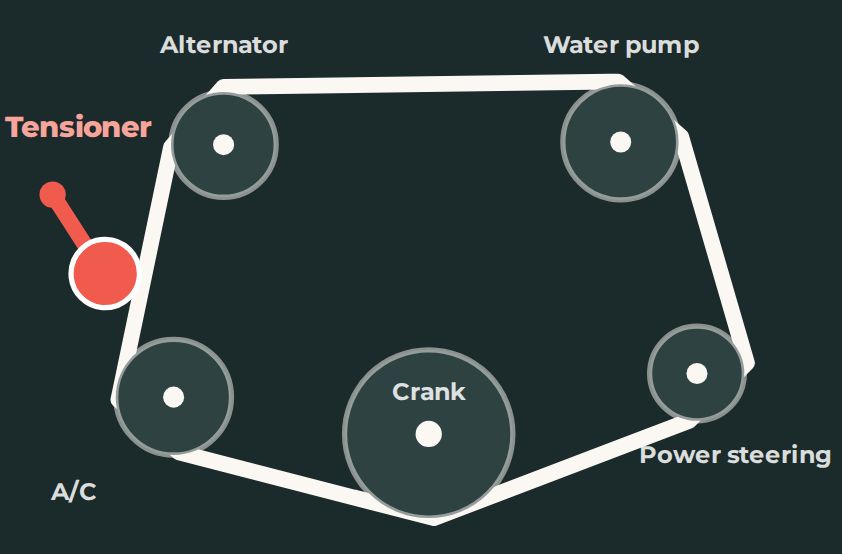
What is the tensioner on a car?
The tensioner on a car is the part that applies constant pressure to a belt so it stays tight as the engine runs. Belts stretch slightly with age and heat, and the tensioner takes up that slack automatically. Older cars used a manual adjuster that a mechanic set by hand. Most modern engines use an automatic tensioner with a built-in spring or hydraulic damper.
Serpentine belt tensioner vs. timing belt tensioner
The serpentine belt tensioner sits on the outside of the engine and is usually visible with the hood open. A timing belt tensioner sits behind a cover and keeps the timing belt tight so the engine's valves and pistons stay in sync. A timing belt tensioner is normally replaced as part of a timing belt service, not on its own.
Why belt tension matters
Belt tension matters because the belt can only drive accessories if it grips the pulleys without slipping. Too loose and it slips. Too tight and it wears out bearings.
Charging. A slipping belt can't spin the alternator fast enough, and the battery runs down.
Engine cooling. On many engines the serpentine belt drives the water pump. No belt means overheating.
Steering and comfort. Hydraulic power steering and the A/C compressor both depend on the belt.
Longer part life. Correct tension protects the belt and every bearing it touches.
Bad belt tensioner symptoms
The most common bad belt tensioner symptoms are noise from the front of the engine and a belt that looks unstable while running.
Squealing or chirping
Especially at startup, in cold weather, or when the A/C kicks on.
Grinding or rattling
From the tensioner pulley, which points to a worn bearing.
A bouncing arm
The tensioner arm vibrates or jumps with the engine running.
Fast or uneven belt wear
Frayed edges, glazing, or cracks on a belt that isn't very old.
If the battery light comes on, the engine starts running hot, or steering gets heavy, the belt may have started slipping or come off. Stop and have it checked.
Hearing a squeal under the hood?
Book an inspectionShould you service your belt tensioner?
Yes, have the belt tensioner inspected regularly and replace it when it shows wear. Tensioners are not a fixed-mileage part on most vehicles, so the decision comes from mileage, inspection, and symptoms.

Heat, climate, and belt condition move this window. Any time the belt is replaced, have the tensioner checked too.
A worn tensioner will shorten the life of a new belt, so replacing them together is often the smarter move. A mechanic can check spring tension, pulley bearing play, and arm alignment in a few minutes.
Is it the belt or the tensioner?
A worn belt and a worn tensioner make similar noises, so test before buying parts. A cracked or glazed belt points at the belt itself. A belt that still looks good but squeals, or a tensioner arm that moves around, points at the tensioner. Grinding or rumbling usually means a pulley bearing. If the belt is wet with oil or coolant, fix that leak first or the new belt will slip too.
What tensioner replacement involves
Replacing a serpentine belt tensioner usually means removing the belt, unbolting the old tensioner, installing the new one, and routing a belt back on. On many engines this is a relatively quick job. On tight engine bays, access takes longer. We'll tell you up front which kind yours is.
Belt and tensioner service in Fort Collins, CO
Community Auto inspects belts, tensioners, and pulleys during routine service and replaces only what actually needs it. If your engine is squealing, chirping, or grinding, we'll find the source and explain your options.
For reliable auto repair in Fort Collins, call or book online. Learn more about our belts and hoses service.
Frequently asked questions
What does a belt tensioner do?
A belt tensioner keeps the engine's drive belt tight so it can turn the alternator, water pump, power steering pump, and A/C compressor without slipping.
How long does a belt tensioner last?
Many last about 60,000 to 100,000 miles, but heat, climate, and belt condition change that. Inspection is the only reliable way to know.
Can I drive with a bad belt tensioner?
Not for long. A failing tensioner can let the belt come off, which can stop charging and, on many engines, the water pump.
Should I replace the belt and tensioner together?
Often, yes. A worn tensioner shortens a new belt's life, and the labor overlaps, so doing both together can save a second visit.