
What a thermostat does in your cooling system
The thermostat is a spring-loaded valve between the engine and the radiator. When the engine is cold, it stays closed so the engine warms up quickly. Once coolant reaches operating temperature, a wax pellet inside expands and pushes the valve open, letting coolant flow to the radiator to shed heat.
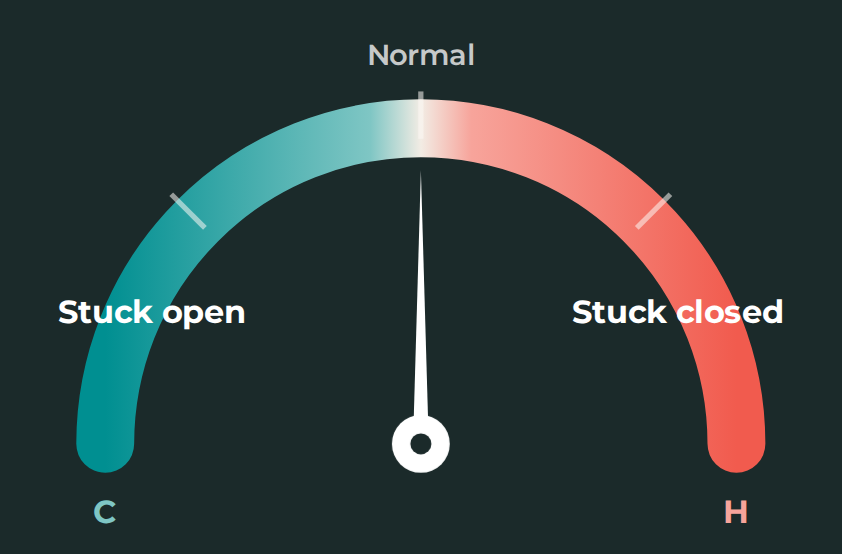
When the thermostat works, the temperature gauge settles in the same spot every drive. When it sticks, the gauge stops behaving. That is why the gauge is your best early warning.
Thermostat stuck open vs. stuck closed
A thermostat can fail in either position, and each one produces a different set of symptoms. Match what you are seeing.
Stuck open
Engine runs too cool
Temperature gauge
Stays low or takes a long time to warm up
Cabin heat
Weak or lukewarm, worse at idle
Fuel economy
Drops, because the engine runs rich while cold
Warning lights
Check engine light possible (P0128 on many vehicles)
Risk
Inconvenient and wastes fuel
Stuck closed
Engine runs too hot
Temperature gauge
Climbs above normal, especially at idle or on hills
Cabin heat
Often works, sometimes very hot at first
Fuel economy
Usually unchanged until overheating starts
Warning lights
Overheat warning or temperature light
Risk
Urgent; can damage the engine quickly
Symptoms of a sticking thermostat
The most common symptoms of a sticking thermostat are a temperature gauge that behaves differently than it used to and cabin heat that no longer matches the weather. A thermostat that sticks only some of the time can make the gauge swing up and down during a single drive.
A temperature gauge that acts unusual
If the needle rises above its usual spot in stop-and-go traffic or on a climb, suspect a thermostat stuck closed. If it stays low after several miles, or never reaches its usual spot, suspect a thermostat stuck open. The cooling system should not behave like a yo-yo.
Cabin heat that doesn't match the engine
Your heater runs on engine heat. A thermostat stuck open keeps the engine too cool, so the heater never really gets going, especially on a cold Fort Collins morning. Weak heat plus a low gauge is a strong sign of a thermostat stuck open. For the other causes of cold air, see why your heater is blowing cold air.
Overheating in stop-and-go driving
A thermostat stuck closed traps coolant in the engine. The temperature creeps up while idling, then drops a little once you start moving. A radiator fan that is not switching on causes the same pattern, which is why a proper inspection matters.
Need a second opinion on your temperature gauge?
Book a visitOther problems that look like a stuck thermostat
Several cooling system problems mimic thermostat symptoms, and a few of them are cheaper to fix. Rule these out before replacing the thermostat.
Low coolant from a leak
A sweet smell after driving, residue near hoses, or a reservoir you keep topping off.
A failed radiator fan or relay
Overheating at idle that clears up at highway speed.
Air trapped in the system
Common right after a coolant service if the system was not bled correctly.
A failing water pump
Weak circulation, sometimes with a weep or whine from the front of the engine.
We've seen thermostat concerns turn out to be a small coolant leak. Fixing the leak and the thermostat together stops the overheating from coming back.
Warning lights you should take seriously
Many vehicles set a check engine code when the engine takes too long to reach temperature, which usually means a thermostat stuck open. A thermostat stuck closed is more likely to trigger a temperature warning. Either way, have the warning light checked rather than clearing it and hoping.

If the gauge climbs fast, pull over
If you see steam or smell hot coolant, pull over safely and turn the engine off. Do not open the radiator cap on a hot engine. Driving while overheating is one of the fastest ways to turn a modest repair into a head gasket job.
What thermostat replacement involves
Thermostat replacement means draining some coolant, swapping the thermostat and gasket (or the full housing on many newer engines), refilling, and bleeding the air out of the system. Thermostats wear out from age, corrosion, and thousands of heat cycles.
A good shop also checks the hoses, coolant condition, and water pump while the system is open. If the coolant is old, it is a natural time for a coolant flush.
Thermostat and cooling system repair in Fort Collins, CO
If your gauge is acting strange or your heater has gone lukewarm, Community Auto can tell you whether it is the thermostat, a fan, a leak, or something else. We test before we replace, explain what we find, and fix what restores steady engine temperature and real cabin heat.
For dependable auto repair in Fort Collins, call or book online. Learn more about our radiator and water pump service.
Frequently asked questions
Can I drive with a thermostat stuck open?
Short term, usually yes. The engine runs cool and wastes fuel, and the heater stays weak, but it rarely overheats. Get it fixed before winter.
Can I drive with a thermostat stuck closed?
No. A thermostat stuck closed can overheat the engine within minutes. Stop driving and have the vehicle towed or inspected.
How do I know if my thermostat is stuck open or closed?
A low gauge and weak heat point to stuck open. A rising gauge and overheating point to stuck closed. A shop can confirm with a scan tool and temperature readings.
Will a bad thermostat set off the check engine light?
Often, yes. Many vehicles log a code when the engine stays below its target temperature too long, which usually means the thermostat is stuck open.