
What anti-lock braking system means
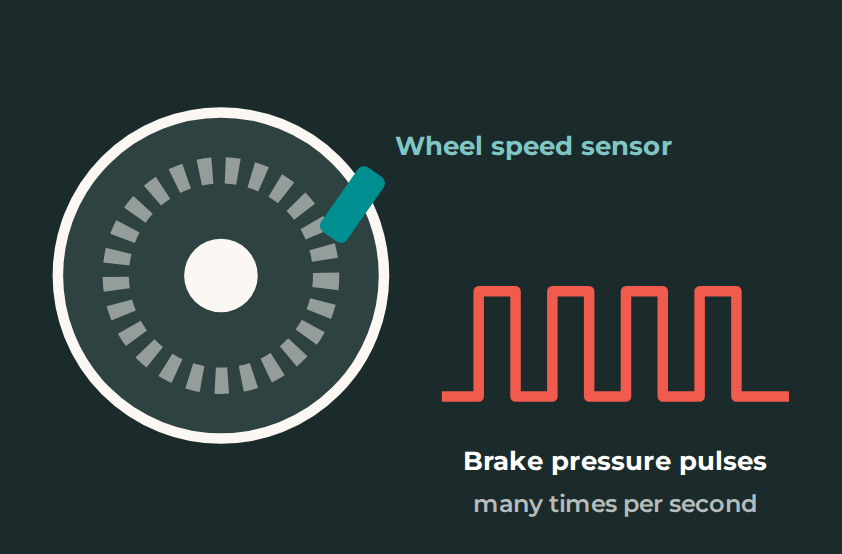
The anti-lock braking system means your car can brake hard without the wheels locking and sliding. A locked wheel can't steer and tends to skid. ABS prevents that by releasing and reapplying brake pressure many times per second, faster than any driver could pump the pedal. It has been standard on new U.S. passenger vehicles since the 2012 model year.
The main ABS parts
Wheel speed sensors
One at each wheel, reporting how fast it's turning.
ABS control module
Watches the sensors and decides when a wheel is about to lock.
Hydraulic unit (modulator)
The valves and pump that pulse brake pressure.
The rest of your brakes
Fluid, lines, pads, and rotors that ABS relies on.
Benefits of ABS brakes
Steering control in an emergency
The biggest benefit of ABS brakes is that you can steer while braking hard. That matters when you need to swerve around a stopped car, an animal, or debris. Without ABS, a panic stop can lock the front wheels, and the car keeps going straight no matter how you turn the wheel.
Better stability on slick roads
ABS helps keep the car straight and stable when braking on wet or icy pavement, and it works with traction control and stability control. All three share the same wheel speed sensors, so a fault in one often affects the others.
Even wear on brake parts
A healthy ABS system and properly working brakes help distribute braking force evenly, which helps pads and rotors wear more evenly and last longer.
ABS light on? Let's scan it before winter.
Book a brake checkWhat ABS maintenance actually means
ABS maintenance is mostly regular brake maintenance done on schedule. The system shares your brake fluid and depends on the rest of the brake system.
Change the brake fluid on schedule. Brake fluid absorbs moisture, which can corrode the ABS valves and pump. Many manufacturers recommend every two to three years.
Keep wheel speed sensors clean. Road salt and magnesium chloride corrode sensors and wiring, a common cause of ABS lights in Colorado.
Replace pads and rotors before they're worn out. ABS can only modulate the brakes you have.
Keep tires matched and inflated. Mismatched sizes can confuse wheel speed readings. See our tire service.
Scan warning lights promptly. A stored code points straight to the faulty sensor or circuit.
Signs your ABS needs attention
The ABS warning light stays on. The system has turned itself off after detecting a fault.
ABS activates on dry pavement at low speed, often a failing wheel speed sensor.
The brake pedal feels spongy or sinks, a fluid or hydraulic issue that affects ABS too.
Traction or stability control lights come on with the ABS light.

Red brake light plus ABS light?
Stop driving and have the car inspected. That combination can mean a problem with the base brakes, not just ABS.
Driving with ABS in a Colorado winter
When ABS activates, the pedal pulses and you may hear a grinding or buzzing noise. That is normal. Here's what to do in the moment.
1
Press firmly
Push the brake pedal hard. Don't pump it. ABS is already doing that for you.
2
Hold steady
The pedal will pulse and you may hear a grinding or buzzing. That is normal. Keep holding.
3
Steer around it
Look where you want to go and steer there. The wheels are still turning, so the car will respond.
On loose snow or gravel, ABS may take longer to stop than locked wheels would, because a locked tire can build up a wedge of material in front of it. Leave extra following distance in winter, and pair ABS with good winter tires.
ABS and brake service: auto repair in Fort Collins, CO
Community Auto inspects and repairs complete brake systems, including ABS sensors, modules, and hydraulic units. We scan for codes, test the sensors, check the fluid, and explain exactly what your brakes need before winter sets in.
For reliable auto repair in Fort Collins, call or book online. See our brakes and ABS service.
Frequently asked questions
What does ABS mean on a car?
ABS stands for anti-lock braking system. It keeps the wheels from locking during hard braking so you can keep steering.
Is it safe to drive with the ABS light on?
Your regular brakes still work, but ABS is turned off. Drive carefully, leave extra space, and have it checked soon. If the red brake light is also on, stop driving.
Does ABS make you stop faster?
On dry or wet pavement, ABS often helps you stop in a shorter, controlled line. On loose snow or gravel it can take longer, but you keep the ability to steer.
What causes the ABS light to come on?
The most common causes are a faulty wheel speed sensor or damaged sensor wiring. Low brake fluid or a failing ABS module can also trigger it.